

The high school rugby I team I played for had by far the lowest average body mass of any team in the Vancouver school district. To get some idea how puny we were, I was the second biggest player on the team! As we watched our much-larger opponents get off their bus, our coach would encourage us by saying, “Remember, the bigger they are, the harder they fall.”
While our coach’s words seldom proved accurate for our team, new discoveries in species population dynamics are now showing that large average body masses do indeed cause advanced species to “fall harder.” Evidence continues to demonstrate that extinction risks in different species of mammals rise dramatically with increasing average adult body mass within the species. Likewise, paleontologists and molecular biologists observe that apparent speciation rates decline with increasing body mass.1
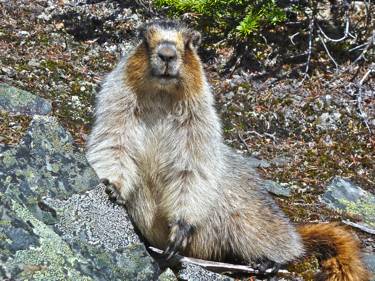
Image credit: Hugh Ross
- One team of biologists showed that “whereas extinction risk in smaller [bodied] species is driven by environmental factors, in larger [bodied] species it is driven by a combination of environmental factors and intrinsic traits.”2 Furthermore, the team demonstrated that extinction-driving “impacts of both intrinsic and environmental factors increase sharply above a threshold body mass around 3 kilograms.”3
- Another research team established that large-bodied mammals (average adult mass = 369.5 kilograms) accumulate “slightly deleterious mutations in mitochondrial protein-coding genes” at a much higher rate than small-bodied mammals (average adult mass = 275 grams).4
- A third study showed that, for primates, extinction risk increases with female body mass.5
- In a quantitative model for terrestrial mammal evolution where the extinction probability increased logarithmically with adult body mass, two physicists confirmed that the model agreed well with data on mammal species that went extinct between 95–50 million years ago.6
Other research efforts confirm the conclusion that large-bodied terrestrial mammals experience rates of extinction far greater than the most optimistic naturalistic speciation rates.7 This result, in part, explains why field biologists have documented the disappearance of half of all mammal species present at the time of Adam and Eve (4,000 total) and yet failed to observe even one example of a mammal speciation during the same epoch (God’s Sabbath rest period from physical creation activity, according to Genesis 1).
Natural process or theistic evolution cannot explain the fossil record history of large-bodied mammals. On the contrary, the evidence demands nothing less than supernatural interventions by the God of the Bible.
Endnotes
- Emmanuel Paradis, “Statistical Analysis of Diversification with Species Traits,” Evolution 59 (January 2005): 1–12; A. P. Martin and S. R. Palumbi, “Body Size, Metabolic Rate, Generation Time, and the Molecular Clock,”Proceedings of the National Academy of Science, USA 90 (May 1, 1993): 4087–91; James F. Gillooly et al., “The Rate of DNA Evolution: Effects of Body Size and Temperature on the Molecular Clock,” Proceedings of the National Academy of Sciences, USA 102 (January 4, 2005): 140–45.
- Marcel Cardillo et al., “Multiple Causes of High Extinction Risk in Large Mammal Species,” Science 309 (August 19, 2005): 1239.
- Ibid.
- 4. Konstantin Popadin et al., “Accumulation of Slightly Deleterious Mutations in Mitochondrial Protein-Coding Genes of Large Versus Small Mammals,” Proceedings of the National Academy of Sciences, USA 104 (August 14, 2007): 13390.
- Jason M. Kamilar and Lisa M. Paciulli, “Examining the Extinction Risk of Specialized Folivores: A Comparative Study of Colobine Monkeys,” American Journal of Primatology 70 (September 2008): 816–27.
- Aaron Clauset and Sidney Redner, “Evolutionary Model of Species Body Mass Diversification,”Physical Review Letters 102 (January 23, 2009): id. 038103.
- Aaron Clauset, David J. Schwab, and Sidney Redner, “How Many Species Have Mass M?” American Naturalist 173 (February 2009): 256–63; A. H. Harcourt and M. W. Schwartz, “Primate Evolution: A Biology of Holocene Extinction and Survival on the Southeast Asian Sunda Shelf Islands,” American Journal of Physical Anthropology 114 (January 2001): 4–17; Ella Tsahar et al., “Distribution and Extinction of Ungulates during the Holocene of the Southern Levant,” PLoS ONE 4 (April 29, 2009): e5316; Samuel T. Turvey and Susanne A. Fritz, “The Ghosts of Mammals Past: Biological and Geographical Patterns of Global Mammalian Extinction Across the Holocene,” Philosophical Transactions of the Royal Society of London, Series B, Biological Sciences 366 (September 12, 2011): 2564–76; Susanne A. Fritz, Olaf R. P. Bininda-Emonds, and Andy Purvis, “Geographical Variation in Predictors of Mammalian Extinction Risk: Big Is Bad, But Only in the Tropics,” Ecology Letters 12, no. 6 (June 2009): 538–49.